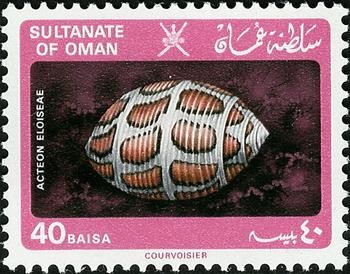
Eloise's Acteon (Acteon eloisae)
Punctacteon eloiseae (originally classified as Acteon eloiseae, and frequently spelled Acteon eloisae) is an exceptionally rare, highly coveted marine gastropod mollusk belonging to the family Acteonidae. Commonly known as Eloise's Acteon, this prized sea snail is heavily endemic to the Arabian Sea, specifically localized around the secluded shores of Masirah Island off the central coast of the Sultanate of Oman. The species is visually striking, characterized by a small, solid, ovate shell—typically reaching up to 32mm to 38mm in length—adorned with distinct spiral punctate grooves and a beautiful pattern of cascading reddish-brown or pinkish-flame markings against a cream-colored background. First described scientifically in 1973 by renowned malacologist R. Tucker Abbott, it was named in honor of Hannah Eloise Bosch, the wife of Dr. Donald Bosch, both of whom were instrumental figures in documenting and introducing Oman's unique marine malacofauna to the global scientific community.
Because of its extraordinary status as one of the most famous and sought-after endemic treasures of the region's marine ecosystems, this elegant gastropod was selected by Omani postal authorities to anchor the higher-value marine fauna wing of the acclaimed 1982 Flora and Fauna Definitive Series. Flawlessly produced via photogravure by the Swiss security printing firm Courvoisier, the 40 Baisa denomination features a detailed, scientifically precise illustration of the shell's unique form, spiraled whorls, and intricate coloration against a crisp, clean background. Complete with the country name in both English and elegant Arabic script alongside the national emblem of crossed swords and a khanjar, this prominent philatelic issue allowed the Omani administrative framework to formally celebrate, preserve, and showcase its rich, globally unique coastal biodiversity during a decade of immense mid-century national transformation.
Because of its extraordinary status as one of the most famous and sought-after endemic treasures of the region's marine ecosystems, this elegant gastropod was selected by Omani postal authorities to anchor the higher-value marine fauna wing of the acclaimed 1982 Flora and Fauna Definitive Series. Flawlessly produced via photogravure by the Swiss security printing firm Courvoisier, the 40 Baisa denomination features a detailed, scientifically precise illustration of the shell's unique form, spiraled whorls, and intricate coloration against a crisp, clean background. Complete with the country name in both English and elegant Arabic script alongside the national emblem of crossed swords and a khanjar, this prominent philatelic issue allowed the Omani administrative framework to formally celebrate, preserve, and showcase its rich, globally unique coastal biodiversity during a decade of immense mid-century national transformation.